Posts

Showing posts with the label b schools in kerala. business schools in kochi

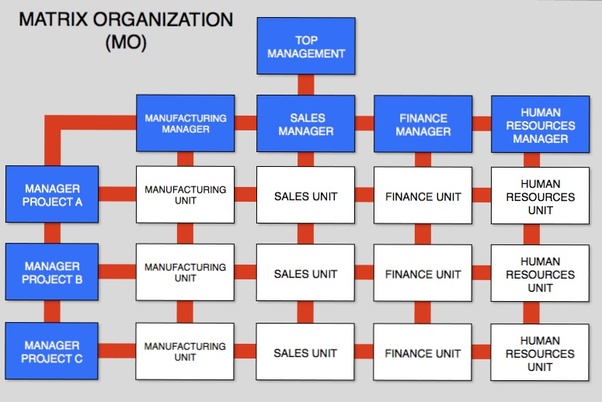
Matrix Organization

Image
A structure where there are more than a single line of reporting managers is called as a matrix organization. Here, there would be more than one boss to whom employees of that organization would be reporting to. It is a complex structure but helps in achieving the ultimate goal of reaching more productivity.  The benefits of a matrix organization are plenty. Matrix organization is used in firms having diverse product lines and services and can be used to give more flexibility and break monotony in the organization. Employees work with colleagues of different departments having expertise in various functions.  When employees from diverse departments work together they help solve problems in a much more efficient manner. It leads to an overall employee development as each one of them is exposed to different functions along with their core job. In this type of organization, employees are assigned a project or job outside their department for a temporary period o...

Guarantor

Image
A person who guarantees to pay the debt of a borrower in an event when the borrower defaults on a loan obligation is called as a guarantor. He acts as a co-signer as they pledge their own services or assets when the original debtor is not able to perform their obligations. A guarantor may also be depicted as a person who certifies the true likeness of an individual who applies for a product or service. He is also known as a Surety. Guarantor is usually someone above the age of 18 who is a resident of the country where the payment agreement applies. The guarantor is expected to maintain a good credit history with sufficient income to cover loan payments if any possible chances arise. Once they enter an agreement, the contract would remain as a binding force till the end of the repayment period. An individual can represent himself as his guarantor where he guarantees the loan with security like an asset he owns. However, in most of the cases, a third-party guarantor is requir...

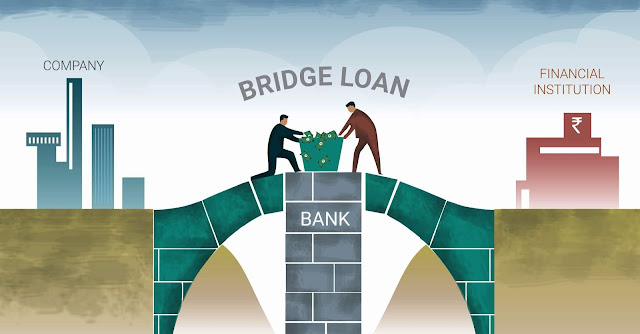
Bridge Loan

Image
A short term loan that is used until a person or company secures permanent financing or removes an obligation that is currently existing is called as a bridge loan. Bridge loans allow users to meet their current obligations by providing them with immediate cash flow. They are short-term loans that has relatively higher interest rates and are usually backed by a collateral like real estate or inventory. In UK, it is usually called as bridging loan, caveat loan or swing loan. They are typically more expensive than other conventional methods of financing. Also, they come with a higher rate of interest, points and other costs that are amortized over a shorter period, and various sweeteners like equity participation by lender in some loans. Bridge loans are arranged quickly in a short period of time with relatively less documentation. Bridge loans in real estate is used for quickly closing property purchases, to retrieve real estate from foreclosure or to take advantage of short-term ...

Asset Stripping

Image
The process of buying an undervalued company with an intention to sell off its assets and generate profit for the shareholders is known as asset stripping. The individual assets of the company such as its equipment, real estate, intellectual property or brands, would be more valuable than the company as a whole due to certain factors like poor management or economic conditions. Its result is often a dividend payment for the investors and either a less-viable company or bankruptcy. Asset stripping is an action that is often engaged in by corporate raiders who buy undervalued companies to extract value out of them. This was very popular during 1970-1980s and is still seen in some of the investment activity conducted by private equity firms. This activity makes a company weak, especially one that has less collateral for borrowing and may have its value-producing assets stripped out, making it less able to support the debt the company has. The proceeds gained from asset stripping wou...

Corporate Cannibalism

Corporate cannibalism or market cannibalization or market cannibalism is the practice of slashing down the price of a product or introducing a new product in the market belonging to established product categories. If a business practices this procedure, it is seen to be eating its own market and by doing so, they hope to get a bigger share of it. It refers to the principle of a newly introduced product, be named as ‘B’, eating up the market shares of product ‘A’ that is already established, but both coming from the same company. In such situations, both the products belong to the same product category. This can either have a positive impact or negative impact on the company’s bottom line, or could be accidental or deliberate, which is most commonly called as cannibalisation strategy. A company that has a product named ‘A’ which is we ll-established in the market, decides to market product ‘B’ which happens to be similar to the first one, therefore both belonging to the...

Economies of Scale

Image
Cost advantages that are reaped by businesses when production becomes efficient is known as economies of scale. Businesses achieve it by increasing the production and lowering costs as costs are spread over a large number of goods which can be both fixed and variable. Generally, the size of the business matters when it comes to economies of scale as the larger the business is, more would be their cost savings. Economies of scale could be internal and external where internal is based on management decisions and external ones are based on outside factors. Considered to be an important concept for any business belonging to any industry, it represents the competitive advantages and cost savings held by larger businesses over smaller ones. There are various reasons why economies of scale mean lower per-unit costs. Firstly, the specialisation of labour and integration of technology helps in boosting production volumes. Secondly, lower per-unit costs comes from ...

Bargain Bin

Image
Bargain bin refers to the unsorted selection of merchandise that has been discounted in price like software, CDs and tools. The major reasons for providing discounts can be the due to the closure of a production company, a steep decline in the popularity of an item in the aftermath of a scandal or a fad, or because a particular product line being discontinued. The term bargain bin originates from the fact that such items would be found in an isolated bin and not on store shelves. A similar term, “Bargain basement”, is now used as a synonym which means a basement in downtown department stores. Here, merchandise for clearance are placed regardless of which section of the store it came from. If a seller wants to sell different types of products as soon as possible, which may be due to various reasons, he keeps all the products in a single box rather than keeping it at their designated shelves and sells at a heavy discount rate so as to attract more customers. The reaso...

Omnichannel Marketing

Image
Omnichannel marketing is referred to the process of integrating an organization’s channels, processes and strategies to gain the ability to engage with its consumers at any time, from any place and from any device. It has become key to the success of marketing as customers engage with the organization in different ways like in a physical store, via websites, mobile apps, virtual catalogs and social media. They also interact with businesses through smartphones, tablets, computers and laptops. The challenge for businesses is to make all these interactions seamless, effective and consistent for all its customers. Consumers expect more personalised communication when interacting with businesses through various channels and devices and those who do not keep up that level lose their ground to its competitors. One of the biggest challenges faced by organizations taking up omnichannel marketing is to break free from traditional marketing campaigns. This strategy requires an entir...

Drip Marketing

The term drip marketing is referred to a communication strategy that “drips” or sends a pre-written messages to the customers or prospects of a company over time. These sets of messages are often sent in the form of email marketing, although other types of media can be used. This automated strategy is different from other kinds of database marketing – firstly, the timing of the messages follow a pre-determined course and then secondly, the messages are dripped in a series which is applicable to a certain behaviour/status of the recipient. The type of media used for drip marketing can be  E mail : through email marketing and it is associated with low cost and thus, making it the most commonly used form of drip marketing. Direct mail : more costly as it is enables drip marketing techniques through standard postal mail. Social media : principles of drip marketing can be applied in many social media marketing tools so as to schedule an updation series. Drip ma...

Blue Ocean Strategy

Image
Blue Ocean Strategy is referred to a market with no or less competition for a product. This strategy is centred on searching for business where only a few firms function and with less or no pricing pressure. It can be applied across different sectors or businesses and is not limited to any one. The term Blue Ocean Strategy is coined by professors W. Chan Kim and Renee Mauborgne and used in their book “Blue Ocean Strategy: How to Create Uncontested Market Space and Make the Competition Irrelevant” in the year 2005. With intense competition among businesses, firms try their best to gain market share and with pricing pressure influencing their functioning, their existence in the market in under threat. This situation arises when a business is operating in a saturated market, referred to as Red Ocean. When there is limited scope for growth, firms look out for verticals or avenues to find new business where they can capture a market and enjoy uncontested market share...

Contextual Advertising

Image
Contextual Advertising is a form of advertising on a website relevant to its page contents. This form of online advertising displays ads on a website based on the theme, content and keywords of that website. Here, advertisements are selected and displayed by automated systems like Google AdSense based on the user identity and content displayed. Contextual advertising is commonly used in ads displayed on blogs, websites and other online platforms like search engines. For example, a person running a movie review blog could have ads to buy movie tickets or a sign up from a movie streaming service. The ads to be displayed are selected by automated systems from the inventory of online registered advertisers. Contextual advertising can be done for both text and videos through Google Adwords and YouTube Ads respectively. Start off by setting up campaign for your ads and choose the type of campaign – text or video ad. Prepare ad text or video file and then move on to targeting, de...

Deming Cycle

Image
The Deming Cycle is a repetitive four-step management method that includes Plan, Do, Check and Act. It is used for controlling and increasing improvement of a business’ functioning. Deming cycle was popularized by an American engineer, statistician and management consultant Dr. W. Edwards Deming. He is considered as the father of modern quality control (QC). The following are the elements of Deming Cycle: •     Plan – To plan ahead for changes, analyze and predict the concerned results. •     Do – To execute the plan and take steps to control the circumstances. •     Check – To check and study the results. •     Act – To take actions to standardize and improve the process. The benefits of Deming cycle are plenty. It benefits a business in problem-solving process, project management, constant development, process trials and daily routine management within the firm. It is widely used in product li...