Posts

Showing posts with the label b schools in kochi

Matrix Organization

Image
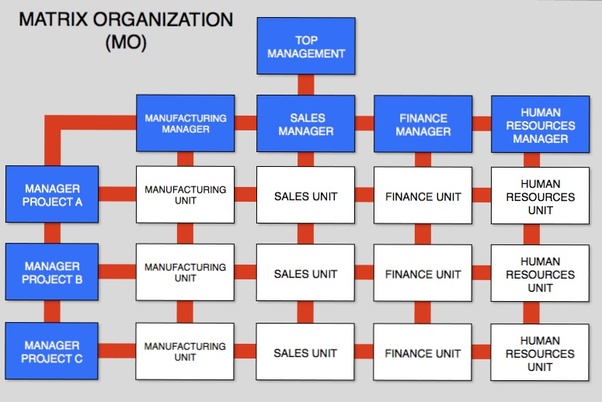
A structure where there are more than a single line of reporting managers is called as a matrix organization. Here, there would be more than one boss to whom employees of that organization would be reporting to. It is a complex structure but helps in achieving the ultimate goal of reaching more productivity.  The benefits of a matrix organization are plenty. Matrix organization is used in firms having diverse product lines and services and can be used to give more flexibility and break monotony in the organization. Employees work with colleagues of different departments having expertise in various functions.  When employees from diverse departments work together they help solve problems in a much more efficient manner. It leads to an overall employee development as each one of them is exposed to different functions along with their core job. In this type of organization, employees are assigned a project or job outside their department for a temporary period o...

Guarantor

Image
A person who guarantees to pay the debt of a borrower in an event when the borrower defaults on a loan obligation is called as a guarantor. He acts as a co-signer as they pledge their own services or assets when the original debtor is not able to perform their obligations. A guarantor may also be depicted as a person who certifies the true likeness of an individual who applies for a product or service. He is also known as a Surety. Guarantor is usually someone above the age of 18 who is a resident of the country where the payment agreement applies. The guarantor is expected to maintain a good credit history with sufficient income to cover loan payments if any possible chances arise. Once they enter an agreement, the contract would remain as a binding force till the end of the repayment period. An individual can represent himself as his guarantor where he guarantees the loan with security like an asset he owns. However, in most of the cases, a third-party guarantor is requir...

Bridge Loan

Image
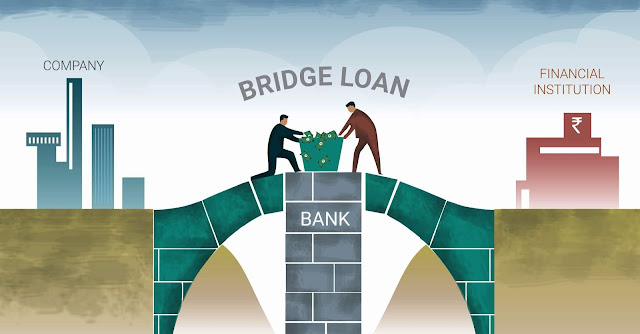
A short term loan that is used until a person or company secures permanent financing or removes an obligation that is currently existing is called as a bridge loan. Bridge loans allow users to meet their current obligations by providing them with immediate cash flow. They are short-term loans that has relatively higher interest rates and are usually backed by a collateral like real estate or inventory. In UK, it is usually called as bridging loan, caveat loan or swing loan. They are typically more expensive than other conventional methods of financing. Also, they come with a higher rate of interest, points and other costs that are amortized over a shorter period, and various sweeteners like equity participation by lender in some loans. Bridge loans are arranged quickly in a short period of time with relatively less documentation. Bridge loans in real estate is used for quickly closing property purchases, to retrieve real estate from foreclosure or to take advantage of short-term ...

Asset Stripping

Image
The process of buying an undervalued company with an intention to sell off its assets and generate profit for the shareholders is known as asset stripping. The individual assets of the company such as its equipment, real estate, intellectual property or brands, would be more valuable than the company as a whole due to certain factors like poor management or economic conditions. Its result is often a dividend payment for the investors and either a less-viable company or bankruptcy. Asset stripping is an action that is often engaged in by corporate raiders who buy undervalued companies to extract value out of them. This was very popular during 1970-1980s and is still seen in some of the investment activity conducted by private equity firms. This activity makes a company weak, especially one that has less collateral for borrowing and may have its value-producing assets stripped out, making it less able to support the debt the company has. The proceeds gained from asset stripping wou...

Corporate Cannibalism

Corporate cannibalism or market cannibalization or market cannibalism is the practice of slashing down the price of a product or introducing a new product in the market belonging to established product categories. If a business practices this procedure, it is seen to be eating its own market and by doing so, they hope to get a bigger share of it. It refers to the principle of a newly introduced product, be named as ‘B’, eating up the market shares of product ‘A’ that is already established, but both coming from the same company. In such situations, both the products belong to the same product category. This can either have a positive impact or negative impact on the company’s bottom line, or could be accidental or deliberate, which is most commonly called as cannibalisation strategy. A company that has a product named ‘A’ which is we ll-established in the market, decides to market product ‘B’ which happens to be similar to the first one, therefore both belonging to the...

Economies of Scale

Image
Cost advantages that are reaped by businesses when production becomes efficient is known as economies of scale. Businesses achieve it by increasing the production and lowering costs as costs are spread over a large number of goods which can be both fixed and variable. Generally, the size of the business matters when it comes to economies of scale as the larger the business is, more would be their cost savings. Economies of scale could be internal and external where internal is based on management decisions and external ones are based on outside factors. Considered to be an important concept for any business belonging to any industry, it represents the competitive advantages and cost savings held by larger businesses over smaller ones. There are various reasons why economies of scale mean lower per-unit costs. Firstly, the specialisation of labour and integration of technology helps in boosting production volumes. Secondly, lower per-unit costs comes from ...

Acqui-Hiring

Image
Acqui-hiring or Acq-hiring or talent acquisition, a combination of the words acquisition and hiring, is referred to the process of acquiring a company to recruit its employees with or without showing interest in its current offerings or their continued operation. Those companies that engage in buying say it is talent acquisition and it typically comes with a per head price. The process also provides a relatively favourable exit strategies for employees with the prestige of being bought by a bigger company which is combined with the typical hiring process. Acqui-hiring has been increasingly becoming common in VC-based startup companies especially within the tech-sector. As of March 2013, Facebook was the largest performer of this process with over 12 in the last five fiscal quarters. Other brands like Twitter, Yahoo and Google are also ranked alongside Facebook for similar practices. This activity is facilitated by acqui-sourcing which is the process of identifying organiza...

Psychographics

Image
A qualitative methodology that is used to describe consumers based on psychological attributes is called as psychographics. It has been applied in the study of personality, values, attitudes, opinions, interests and lifestyles. Though psychographics is often equated with lifestyle research, it has been argued that it should apply to the study of cognitive approaches including attitudes, interests, beliefs and opinions while lifestyle should apply to the study of overt behaviour.   As this research method focuses on interests, activities & opinions, they are sometimes abbreviated as ‘AIO variables’. The study of individuals or communities using psychographic can be valuable in marketing, demographics, opinion research, social research and prediction. Psychographic attributes can be contrasted with the variables of behaviour like purchase data and usage rate, along with organizational descriptors or firmographic variables like industry, number of employees and fu...

Buying Signal

Image
Behavioral cues indicating a prospective or existing customer’s intentions in terms of their readiness to buy is called as Buying Signal. This helps in making sales process more efficient and high-yielding than before. Companies often rely on tolls like leading scoring, predictive analytics and account-based marketing (ABM) technologies to identify buying signals. It is often triggered by a change in a customer’s attitude or behavior. For example, a company which signed a lease just now to rent office space in a building and hired a CIO may demonstrate the right buying signals to show that t is ready to buy server hardware or networking gear. In this example, buying signals may not be directly related to the product or service but indicates the prospect’s readiness based on secondary factors. While companies might have enlisted tools previously like direct mail or cold-calling to identify new prospects, other tools like analytics and ABM can be used to identify a more ta...

Solution Selling

Image
Solution selling is a methodology used in sales where a salesperson focuses on the customer’s problems to address it with appropriate offerings of the company rather than just promoting it. Here, the solution for the problem is linked to the product and its benefits received from using it. Solution selling is usually used in sales where products are a part of the elements making a solution to a customer’s problem. The term was developed by Frank Watts in the year 1975. He began teaching “solution selling” as an independent consultant and then presented his sales process to Xerox Corporation as a one-day workshop in the year 1982. Next year, Electronics magazine portrayed his method as an unmistakable trend in the distribution of systems-related products. Solution selling has become somewhat a generic topic in the marketplace with its core brand carrying distinct characteristics. Those brands that follow this method generally apply an approach like that of consultative sa...

Drip Marketing

The term drip marketing is referred to a communication strategy that “drips” or sends a pre-written messages to the customers or prospects of a company over time. These sets of messages are often sent in the form of email marketing, although other types of media can be used. This automated strategy is different from other kinds of database marketing – firstly, the timing of the messages follow a pre-determined course and then secondly, the messages are dripped in a series which is applicable to a certain behaviour/status of the recipient. The type of media used for drip marketing can be  E mail : through email marketing and it is associated with low cost and thus, making it the most commonly used form of drip marketing. Direct mail : more costly as it is enables drip marketing techniques through standard postal mail. Social media : principles of drip marketing can be applied in many social media marketing tools so as to schedule an updation series. Drip ma...

Blue Ocean Strategy

Image
Blue Ocean Strategy is referred to a market with no or less competition for a product. This strategy is centred on searching for business where only a few firms function and with less or no pricing pressure. It can be applied across different sectors or businesses and is not limited to any one. The term Blue Ocean Strategy is coined by professors W. Chan Kim and Renee Mauborgne and used in their book “Blue Ocean Strategy: How to Create Uncontested Market Space and Make the Competition Irrelevant” in the year 2005. With intense competition among businesses, firms try their best to gain market share and with pricing pressure influencing their functioning, their existence in the market in under threat. This situation arises when a business is operating in a saturated market, referred to as Red Ocean. When there is limited scope for growth, firms look out for verticals or avenues to find new business where they can capture a market and enjoy uncontested market share...

Quality Score

Image
Quality Score is referred to the Google rating for the quality and relevance of both the keywords and the PPC ads done for a business, product or service. Quality score is used to determine the Cost Per Click rate (CPC) which is then multiplied by the maximum bid to determine its ad rank in the ad auction process. It depends on multiple factors like click-through rate (CTR), the relevance of each keyword in the ad group; quality and relevance of landing page; relevance of ad text; and historical AdWords account performance. When more and more people clicks on your ad then it’s a strong indication to Google that the ads drafted are relevant and very much useful for the users. Accordingly, Google rewards you with higher ad rankings and lower cost. By optimizing the quality score of your ad, you are setting up a higher Return on Investment (ROI) as lower cost per conversion is directly linked to better ROI rates. To increase your quality score, do a keyword re...

BASHO Email

Image
BASHO Email is an attempt to gain the attention of a prospective lead via personalized emails so as to arrange a meeting with them. It is not meant to be super-scalable but when done right, it lets you achieve a steady jump in your email response rates and a total number of booked meetings. It is always great to call a prospect but if time restricts you, then BASHO email is your go-to solution. There are many reasons to implement BASHO email. Firstly, to increase the conversion rate by 60% to 80%. As people tend to open personalized emails, BASHO emails do the work for you if done right. Secondly, it can be used to reach high-value accounts like that of a leading CEO. Thirdly, it is easy and does not require any special training to set strategies. Find any point that can create a way to reach out to prospects in a more personalized way. BASHO emails can be used for more than sales. For example, marketers and bloggers can use BASHO emails for collaborative initiatives, fo...

Absorption Costing

Image
Absorption Costing is an accounting cost method which entails the complete cost of manufacturing or providing a service. It includes not just the cost of labour and materials but also the total manufacturing overheads, either fixed or variable. The cost of each cost center can be direct or indirect and is identified with individual cost centers like accounting, IT, maintenance, etc . Direct cost can be identified with individual cost centers whereas indirect cannot be. The distribution of overheads among each department is called as apportionment. Apportionment can be done in two methods – the primary distribution of overheads and secondary distribution. In primary distribution, the selection of the base on which the overheads are apportioned depends on service or use basis, survey basis and ability to pay basis. Whereas in secondary apportionment the cost of service departments i.e., apportioned overheads along with the values of direct materials, labour and expenses of the...

Total Quality Management (TQM)

Image
Total Quality Management (TQM) is a continuous process of detecting and decreasing/eliminating manufacturing errors, streamlining supply chain management, boosting customer experience, and ensuring that all the staffs of the business are up to speed with their training. It aims in holding all the parties involved in the production process who are accountable for the total quality of the final output. TQM is a set of management practices that places a strong focus on process measurement and controls as means of constant improvement. While it was originated in the manufacturing sector, its principles can be used in a variety of organizations or industries like manufacturing, banking and finance, and medicine. And TQM techniques can be applied to all departments within the organization as well and ensures that all employees are working toward the goals fixed by the company thereby improving the function in each and every department. The essential requirements for successf...

Crowdsourcing

Image
Crowdsourcing is a practice of approaching a body of people to obtain needed knowledge, goods or service. It is a combination of two words – crowds and outsourcing, coined in the year 2006 by Jeff Howe in his article “The Rise of Crowdsourcing”. Crowdsourcing involves obtaining information, word or opinion from a group of people who submit data through online platforms like social media and smartphone apps. These people involve in Crowdsourcing works as paid freelancers or on a voluntary basis. For example, an app involved in reporting traffic updates to its users encourages drivers and the public to report any cases of accidents and roadway incidents. The advantages of this practice is its cost savings feature, speed and the ability to work with people of all skill sets which may not be possible with the in-house team. If a particular task takes about one week to complete by an employee, it can be broken down by the business and completed in a much faster time period....

Permission Marketing

Image
Permission marketing is a marketing approach to sell goods and services in which the intended audience i.e., the consumers receive promotional messages upon consent from them. First coined by Seth Godin in one of his books later became constantly used in Internet marketing tactics. Opt-in email is a good example of permission marketing where users sign up in advance to a website’s information about certain brand’s product/service. Permission marketing is considered to be an effective approach as the project is more receptive to a message, requested in advance. It is also more cost-efficient as the prospect or target audience is easily identified and targeted. With digital platforms like email and social network a direct access to consumers is possible removing many overhead costs. Subscription to SMS, newsletters, RSS feed, blogs or loyalty cards are opportunities for permission marketing. The process of permission marketing begins with the business offering something va...

Affiliate Marketing

Image
Affiliate marketing is an advertising model where an online retailer pays a commission amount to an external website for generating traffic or sales from its referrals. It is one of the most popular ways by which a party partners with a business to make money by referring visitors or users to a business’s page/product/service. The parties involved in affiliate marketing are the merchant or the creator/seller/brand that creates the product. These merchants need not be actively involved in this process but should have a product to sell. The second party is the affiliate or publisher who promotes one or more affiliate products to attract potential customers to buy merchant’s products. For example, a person submitting a review blog on the merchant’s product can paste a unique link for that particular affiliate product. When a user clicks on that link to purchase the product, the affiliate receives a fixed commission on that sale. The final party is the consumer or the user who r...

Reverse Marketing

Reverse marketing, as the term suggests, refers to a marketing concept wherein the customer seeks the firm for its product/service on their own and not vice-versa. It is usually done by traditional advertising methods like television ads, print ads in magazines and through online platforms. Here, companies provide valuable information to its consumers without asking them to purchase anything. Reverse marketing is used by firms to improve their brand image rather than just spreading awareness about their offerings. This approach is also used in B2B markets and supply chain management. One of the most famous ad campaigns is that of Dove Campaign for Real Beauty launched in 2004. Rather than advertising the key points of the products the campaign focused on the natural beauty of women to sell their product. As a result, their sales skyrocketed above $1 Billion and caused the brand to recreate their brand around this strategy. To start off with reverse marketing, the first ste...