Posts

Showing posts with the label top business schools in kerala

Matrix Organization

Image
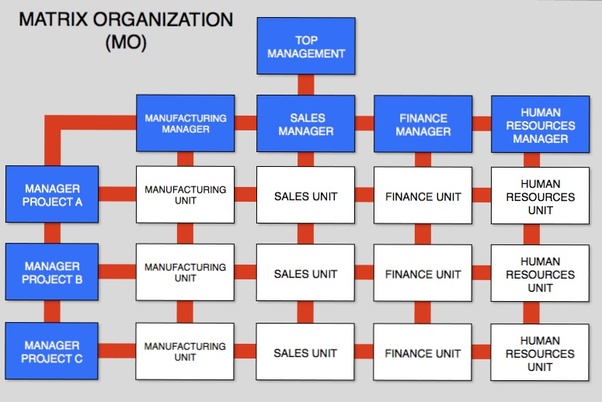
A structure where there are more than a single line of reporting managers is called as a matrix organization. Here, there would be more than one boss to whom employees of that organization would be reporting to. It is a complex structure but helps in achieving the ultimate goal of reaching more productivity.  The benefits of a matrix organization are plenty. Matrix organization is used in firms having diverse product lines and services and can be used to give more flexibility and break monotony in the organization. Employees work with colleagues of different departments having expertise in various functions.  When employees from diverse departments work together they help solve problems in a much more efficient manner. It leads to an overall employee development as each one of them is exposed to different functions along with their core job. In this type of organization, employees are assigned a project or job outside their department for a temporary period o...

Critical Success Factor

Image
A management term linked to an element that is necessary to achieve an organization or project’s mission is called as Critical Success Factor (CSF). It is also known as the Key Result Area (KRA) or Key Success Factor (KSF). CSF is a critical factor/ activity required for ensuring an organization’s success. CSF term was initially used in data analysis and business analysis. For example, the critical success factor for a successful IT project is user involvement. It should not be confused with success criteria as they are outcomes of a project or achievements of an organization that is necessary to consider the project or organization as a successful one. Success criteria is defined with the objectives and key performance indicators (KPIs) may be its quantifying unit. The concept of success factors for CSF was developed by D Ronald Daniel of McKinsey & Company in the year 1961. John F Rockart refined this process into critical success factors during 1979-81. And in...

Marketing Attribution

Image
Marketing Attribution is defined as the process of identifying a set of user actions known as events or touchpoints that contribute in some way to achieve the desired output. Each of these actions is later assigned a value. These events or touchpoints include any branded interaction caused from a TV commercial to a promotional email offer. Marketing attribution is a strong tool for those individuals who can uncover various inner workings of their efforts and to use this knowledge in creating game-changing marketing strategies. By using this tool, marketers understand their customer and touchpoints with highest engagements to create effective marketing strategies. They also use it to understand the value of the customer and looks into the campaign to get insights on how to creatively solve the problems faced by the company and its customers. The common types of marketing attribution models are First-Touch Attribution, Last-Touch Attribution and Multi-Touch Attribution....

Search Engine Results Page (SERP)

Image
Search Engine Results Page (SERP) is a list of results displayed on search engines like Google, Bing, Yahoo, etc. in response to a specific query or phrase. The results include a listing of linked web page titles, its URL, a brief description of the contents in that page and at times, points of interest within that website. The term SERP is often used by Search Engine Optimization (SEO) specialists and Search Engine Marketing (SEM) practitioners. It contains two types of content – paid and organic results. Organic results are those pages that are displayed on the pages of SERP as a result of its algorithm. SEO specialists aim at optimizing web content to bring their webpage in the top positions of SERP because it is regarded to be the most useful content pages and as it goes down, it becomes less relevant. Whereas, paid results are ads from brands that are displayed when keywords provided by advertiser matches with the user’s query. Such ads are configured either through sea...

Reactive Marketing

Image
Reactive Marketing strategy is referred to a marketing strategy that takes place due to unforeseen competition. The big wide world of social media is now the major place of reactive marketing. At certain times, companies go with this approach to ensure their survival in the market and gain profits. Social media is now the major place of reactive marketing as it helps in generating an incredible rate of engagement for brands. Here, brands place their product or service in places where consumers are already looking for it actively. Reactive marketing can be done through many channels. Search Engines like Google, Yahoo or Bing is one among the many channels that lets you display your brand’s offerings via results displayed on the search engine results page (SERP) by entering keywords your consumers are searching for. It can be done either through paid ads, local search or through organic search results. Directory websites, another channel for reactive marketing, lets you ...

Earnings Before Interest, Tax, Depreciation and Amortization (EBITDA)

Image
Earnings Before Interest, Tax, Depreciation and Amortization (EBITDA) is a metric for measuring a company’s operating performance. It is an alternative method for evaluating a company’s performance without factoring in financial, accounting or tax decisions. EBITDA= Earnings before Interest and Tax (EBIT) OR Operating Profit + Depreciation + Amortization OR EBITDA= Net Income + Interest + Taxes + Depreciation + Amortization EBITDA is used to analyze and compare the profitability among different companies and industries which is calculated from the information found in a company’s financial statements. The earnings, tax and interest values are found in the income statement while depreciation and amortization values in the notes to operating profit or in cash flow statement. Companies tend to highlight their EBITDA value when their Net Income is not impressive. It can be sometimes used to distract investors from showing a company’s lack of profitability. Certai...

Bottom-of-Funnel (BOFU)

Image
Bottom of the funnel strategies aims at providing prospects with a definite offer and explicit reasons to buy. These prospects have conducted their research and learnt about your brand but now need a taste of the final product. Bottom of the Funnel is the result of a response to the activities conducted in top and middle of the funnel stages. It refers to the purchase stage where prospects are provided with offers and reasons to buy the product/service. The prospect has done research and is ready to be the company’s new customer. Therefore, sales representatives should contact the “lead” directly highlighting the product to build trust between the prospect and product. The content used in the bottom of the funnel should prove the value of the purchase to the prospect. But a different level of engagement is required to convince them about their decision to purchase by initiating a sense of urgency and immediate need for the product. Activities like free trials, live demo, f...

Top of the Funnel

Image
Top of the funnel marketing is used to refer to activities and campaigns that focus on lead generation and targeting consumers in the top portion of the marketing funnel. These activities include content marketing through social media, blog posts, paid advertising, free trials, etc. The main objective of the top of the funnel marketing activity is for lead generation and thereby converting those leads into their customers. Every marketer filters prospective customers or clients from their pool of database. The prospects who are interested in the product/ service they sell through are filtered through top, middle and bottom of the marketing and sales funnel.   People interested in the brand or product sticks on whereas the others leave the funnel, making the group smaller. The upper part of the funnel focuses on spreading awareness, educate prospects and create a brand image for the product. The key elements of top of the funnel content should be catchy, easy to underst...

Emotional Sale

Image
Isn’t every decision related to some emotion? Be it regarding your business, shopping or personal matters, we tend to believe that our decisions are taken rationally. But they are actually unaware that emotion is always a part of the decision-making process. Emotional sale refers to the process of sellers making an emotional connection between the prospective customer or client and the product he is trying to sell so as to close the sales. You can provide a ton of arguments to convince the prospect about the product’s benefits but until and unless you hit the emotional note to make them buy it, your efforts are invalid.   There are two potential approaches to emotional selling – Positive approach and Negative approach. In a positive approach, the seller highlights the positive features of the product which could cause good things to happen in the future. Whereas in the negative approach the product is presented as a cure or prevention for the prospect’s requirements or...

Transactional Marketing

Image
Sale and ‘nothing but Sale’ – That’s exactly what transactional marketing is all about. Unlike other marketing techniques that focus on building long-term relationships, transactional marketing focuses only on sale.   In this type of marketing technique, retailers encourage customers with shopping coupons, discounts and events to make the sale happen. It not only enhances the percentage of sales but also acts as a motivation for your target audience to buy the products. In short, we don’t boost the transactional marketing to develop their ongoing relationship with the customer, instead, Transactional marketing is to majorly maximise the business efficiency by increasing the individual SALES. The strategy is built around a single purchase and not with doing volumes. Transactional marketing has its roots in the renowned “Four P’s of marketing mix – product, pricing, placement and promotion. •    Product – This process involves of creating a quality prod...

Types of Business Competition

Image
The number of brands that sell a product may affect the strength of the competition. And when there are many businesses selling a particular product, price considerations and product differences are considered more important and hence, number of brands selling the similar product determines the structure of the market. Here are the types of business competition that exists in a market. • Monopoly – It exists when there is only one brand marketing a product for which there are no close substitutes. • Oligopoly – In an oligopoly, there are few firms marketing a product for which they control much of the supply. Products in an oligopoly are similar or uniform in nature like coal or steel with only perceived differences. • Monopolistic competition – When many firms are marketing a product, each firm attempts to differentiate its product to convince consumers that their product is the one to buy. • Perfect competition – If a perfect competition existed, it would be a marke...

Processes Involved in Project Risk management

Image
Project risk management involves the processes aimed at conducting risk management planning, identification, qualitative and quantitative analysis, responses, monitoring a project, etc. Here is a brief guide on the processes involved in project risk management. • Risk identification – It includes the identification and determination of the possible risks associated with the project and also proper documentation of the properties and effect of each one. • Risk quantification – This step includes the evaluation of the risks that are identified in the first step and risk interactions to analyze the possible project outcomes. It is the primary method to determine which risk need a response. • Risk response development – It includes clearly defining enhanced steps to utilize opportunities and to respond to threats. Threat response can fall into categories of risk avoidance or risk transfer. • Risk response control – It is the execution of the risk management plan developed in...

Guerrilla Marketing

Image
Guerrilla marketing is an advertising strategy which pushes on effective low-cost unconventional marketing tactics that yield maximum results. The term was first conceived by Jay Conrad Levinson in his book Guerrilla Marketing inspired from guerrilla warfare. Guerrilla marketing is all about taking your customer by surprise and creating a social buzz. This advertising gimmick relies heavily on unconventional modes of marketing, high energy and imagination. The key focus is that buyers feel special, privileged, positively surprised or thrilled on the interaction with the brand. Often, the conventional mode of advertisements through television, radio, hoardings doesn’t serve the actual purpose of holding the attention of the audience. This is where guerrilla marketing wins with the unconventional ways. Guerrilla marketing is often ideal for small businesses that need to reach a large audience without spending much. It’s used by big companies in sync with their o...

Lean Start-up Plans

Image
Lean Startup plan is more used when you are at the very beginning of your business. Before even you launch your business, you may need some killer plans to attract your investors so that you ensure a smooth financial success moving forward. But it doesn’t mean that you are profitable from day one. Turning to be profitable may take years, even a publicly traded tech companies may not be profitable for years. Start-up plans are normally lean in order to help companies launch quickly and allow for changes as required when the company grows. But you have to make sure you include the must have’s like customer base, finances, and infrastructure. Below given are some of the critical components involves in Lean Start-up Business Plans 1. Strategy. Explain your strategy with a few bullet points that serve as a reminder of strategic focus on a problem your audiences face and your solution to that problem, your target market, and why you and your business are ideal to match that soluti...

Which Stream is Right for you In MBA and How to Choose it?

Image
We all know MBA’s are one of the top paid Jobs across the globe. Once you decided to go for MBA, the most confusing question is which stream I will specialize in? Especially unlike other technical specialization, MBA is a course which is very closely aligned with your personality. So before choosing the stream or even MBA itself, the two questions you should introspect yourself are; 1.Why MBA? The prime question needs to be answered. Is it just for a job or you felt you would be a good management person. If your answer is for a Job, better don’t choose and if it’s later one, analyze yourself and identify your best qualities that make you a good management person. 2. Which Stream? Once you decided to go for MBA, next confusion is on which stream to choose. You need to do a thorough self-examination by asking questions like; a)Are you a people person, and good at understanding emotions, probably HR might be a good choice for you b)Good in presenting and people listen to ...

Importance of Macroeconomics

Image
Macroeconomics is the study about the averages and aggregates of an entire economy and it is also a part of the economic theory which studies the economy in its whole. Unlike microeconomics which includes the study of individual economic units likes a household or an industry, macroeconomics concentrates on the total economic system which involves the national income, investment and total savings, employment, demand and supply, price levels, etc. The below listed reasons outline the importance of macroeconomics. ·         Helps understand the functioning of the modern economic system which is complicated, while also describing how the economy functions as whole. ·         Aims to achieve the goal of economic strength with higher levels of GDP and employment. It also analyses the factors that determine the economic growth in a country. ·         Helps bring stabil...

Career Benefits an MBA Program Offer

Image
An MBA programme is considered to deepen one’s knowledge, fine tune skills and abilities and mould them for a successful career. Below listed are some of the career benefits an MBA program can offer. •Transferable skills – Both the hard and soft skills acquired through an MBA program can be transferred to function through a myriad of roles in the career. •High employment rates – Having an MBA degree ensures job security and also increases the chance of getting future employments. •Specializations –Specializations in an MBA program allow students to explore the nuances of the industry and understand the career options available. •Networking opportunities – Networking during the course help build contacts in the industry and also to increase the exposure to different business practices, point of view and work culture. For more details please visit :  https://rcbs.rajagiri.edu/

Skills Employers Look for in an HR Professional

Image
Pursuing a career in HR involves making decisions regarding hiring and managing the workforce, handling employee welfare and being part of organizational development. These tasks call for specific skills and employers are keen on recruiting professionals who are ready for the challenges. Below listed are the important skills employers look for in an HR professional. •Performance management – Involves monitoring performance, assessing the capability of individuals •Teamwork and collaboration – Should be able to lead or participate in teamwork and be active for collaboration. •Project management – HR professionals are required to undertake various projects to improve productivity and performance of the employees •Onboarding - Companies looking for HR professionals who can bring in new recruits on board to reduce the hiring expense. •Employee relations – HR professionals act as the bridge between the employer and employee and should be able to create strong relations with the...

Project Management Skills MBA Students Should Know

Image
For building a successful career in MBA, students should have certain skills that will prepare them for the challenges ahead. Here is a list of important project management skills an MBA student must know. ·         Detail orientation – Before working on a project, the student must know everything about it in detail to ensure successful completion. ·         Recognising problems – Recognising these problems quickly and coming up with suitable action is inevitable for a career in MBA. ·         Cost Control – Keeping an eye on the expense and managing finances for the successful completion of the project is needed. ·         Risk Management – Overcoming risks and learning to handle them with ease. ·         Task management – Allocating tasks according to priority and completing them acc...

Public Speaking Tips For MBA Students

Image
Best Business Schools in Kerala One quality any MBA student should develop is on public speaking. Because as business management students and future business people you are expected to be good presenter all the time. How do you develop public speaking skills? Public speaking requires soft skills, too. Some of the key points you should be aware of when you are developing your public speaking skills are; 1.Know your topic better and better  Whatever your topic is, try to rehearse yourself and if possible record it, watch it carefully. You’ll notice the difference; your voice gets softer when you’re less certain of yourself. Research and mold yourself on those areas until you get smoother and able to speak at the same tone where you are most confident. 2. Involving little personal interaction when you are in public speaking  Your body language and how you make your interaction personal matters a lot. Start using your hands, make eye contact, and speak to the audienc...